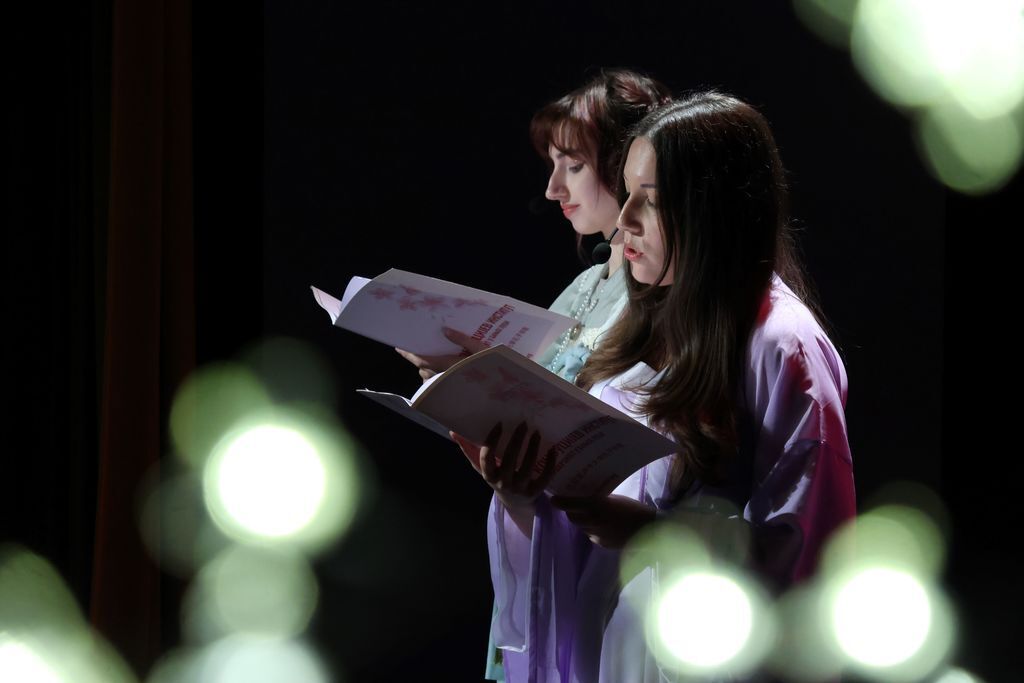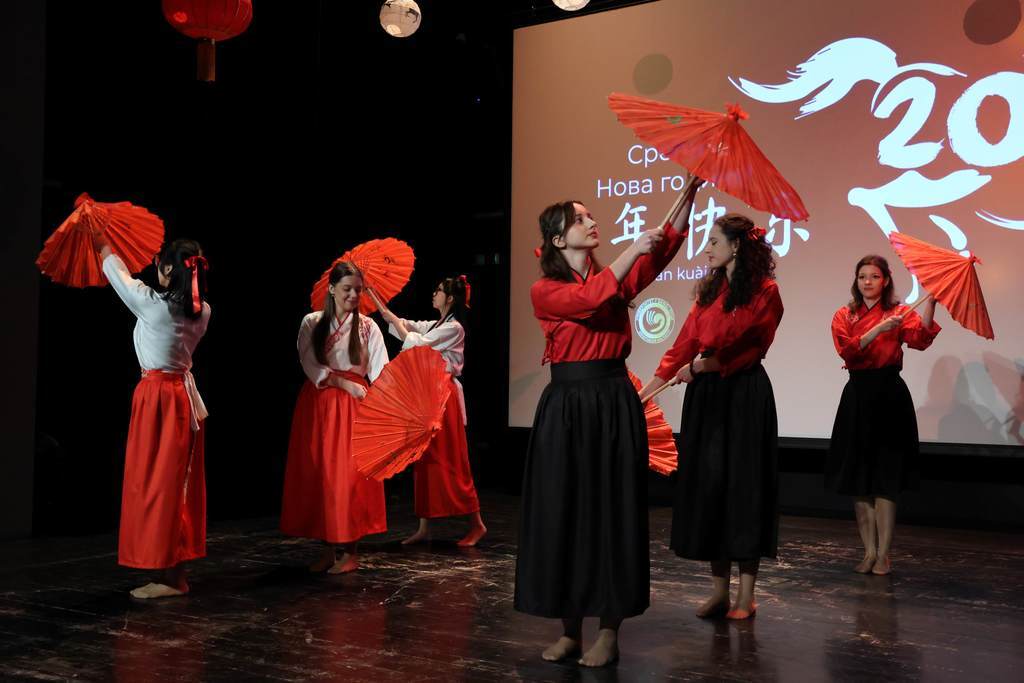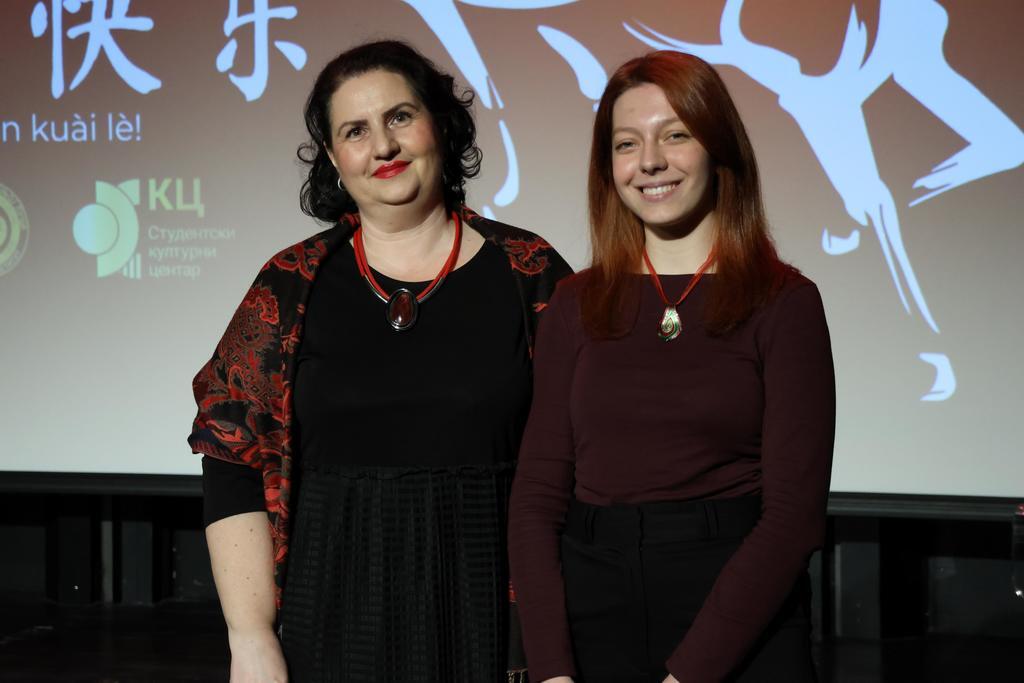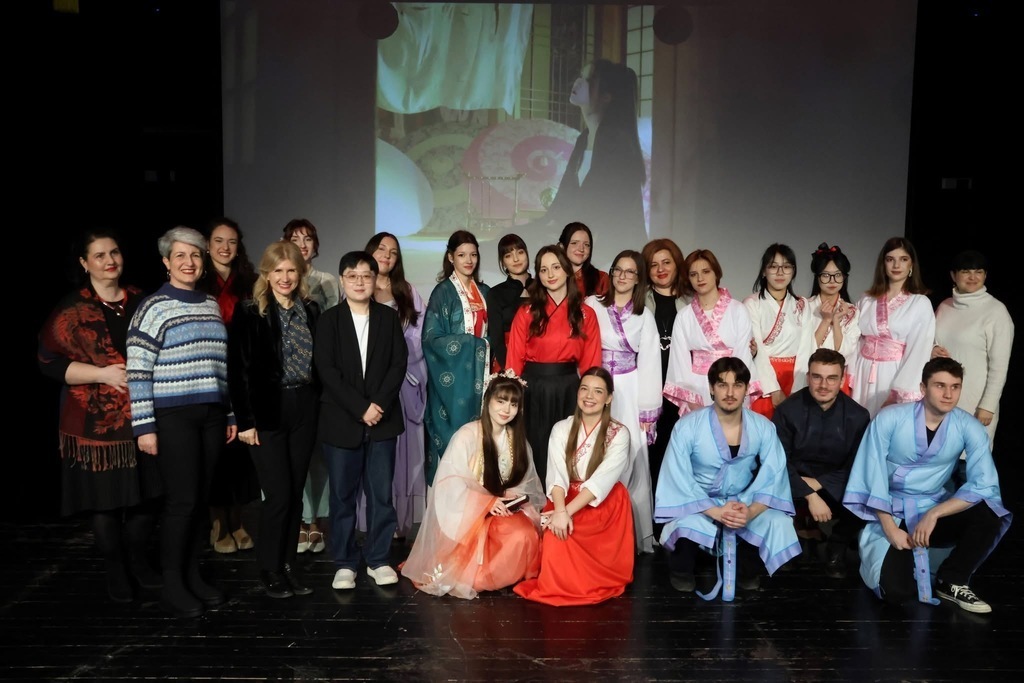
The Confucius Institute of the University of Banja Luka organized a formal celebration of the Chinese New Year on 17 February 2026, with a rich program and an award ceremony for winners of the literary competition for secondary school students on the theme “Red Fire Horse – a symbol of courage, energy, and freedom.”
The Rector of the University of Banja Luka, Prof. Radoslav Gajanin, PhD, said that Synology students achieve excellent results in Chinese language and culture competitions, and thanks to the Confucius Institute, it has been possible for the Republic of Srpska and Banja Luka to get acquainted with Chinese language, culture, and tradition.
Rector Gajanin reminded that Chinese companies operating in the Republic of Srpska enable Synology students adequate practice but also exchange with other faculties and universities in China.
The Director of the Confucius Institute, docent Ljiljana Stević, PhD, said this was the eighth Chinese New Year celebrated at the University of Banja Luka.
“We are entering the year of the Fire Horse, and we hope this year will be better than the previous one. In China, this is a special holiday that gathers families and loved ones, just as the Serbs do for Christmas”, said Stević, who is the Head of Study Program Sinology at the Faculty of Philology of the University of Banja Luka.
She also said that Sinology students at the University of Banja Luka, where there are about 15 students per generation in average, are recognized in universities at the exchange in China, as well as at the Erasmus exchange in Europe, which is the best sign that they are doing a good job.
Competition winners
A Call for a literary competition for secondary school students titled “Red Fire Horse – a symbol of courage, energy, and freedom” was published last December, and it was dedicated to students in all secondary schools, with the aim to find an inspiration and write their own story on this topic, and a total of 39 students sent their papers.
The first prize went to Katarina Radić, a 3rd year student of Gymnasium “Vaso Pelagić” in Brčko, the second prize was won by Sara Ćudić, a 4th year student of the Gymnasium “Dr Mustafa Kamarić” from Gračanica, and the third prize went to Jovan Travar, a 2nd year student of the Catholic School Center “Blaženi Ivan Merc” from Banja Luka. The Confucius Institute also rewarded two papers that were in the final round, by authors Arijana Kosić-2nd year student of Gymnasium Banja Luka, and Viktor Babić-2nd year student of Technical School from Gradiška.
All papers presented within this year’s program prepared in cooperation with sinology students and Students’ Cultural Center of the University of Banja Luka, were supposed to contain motives of Chinese culture with the emphasis on the symbolism of the Fire Horse year, which is the new beginning, a chance for growth and widening of sighting perspective, where we find our own direction and path. The winning papers were selected by the jury of experts: Prof. Sanja Macura, PhD, Prof. Mijana Kuburić Macura, PhD, and Assistant Professor Bojana Pavlović, PhD, from the Faculty of Philology at the University of Banja Luka.
In the course of commemorating the Chinese New Year, the Confucius Institute is organizing the exhibition of Chinese postal stamps on 18 February 2026, at 12.00 o’clock at the Students’ Cultural Center of the University of Banja Luka.
Chinese New Year
The Chinese New Year (守岁 / shǒu suì), known as the Spring festival, is the most important holiday that marks the end of Winter and the coming of Spring in China. Today, it is celebrated not only in China but in many cities around the world, through traditional Chinese and also modern cultural-artistic manifestations. These celebrations give an opportunity to other nations to feel the charm of Chinese tradition and culture.
It is based on a lunar calendar – starts with the New Moon that appears between January 21 and February 20. It is divided into 12 months of 29 or 30 days. Since the lunar and solar calendars are not of the same length, an additional month is added to the lunar calendar every few years, and therefore, the Chinese New Year starts on a different date every year.
This year, the Chinese New Year, according to this calendar, starts on 17 February 2026 and will last until 5 February 2027.
Photo: D. Desnica