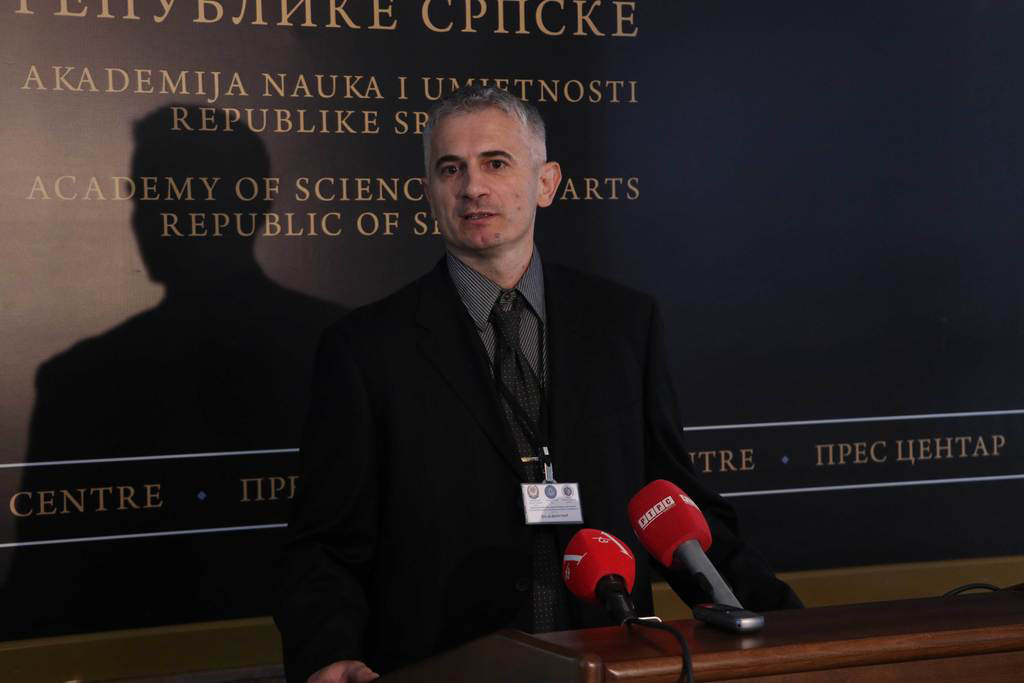
An Associate Professor at the Faculty of Natural Sciences and Mathematics of the University of Banja Luka (PMF UNIBL), Dragan Korać, PhD, achieved an extraordinary scientific contribution with his excellent research results, raising the limits of engineering and information sciences.
His latest scientific research results, presented in the paper Computational Engineering Approach-Based Modeling of Safety and Security Boundaries: A Review, Novel Model, and Comparison, were published in one of the most prominent Springer magazines, Archives of Computational Methods in Engineering.
It is the most prestigious scientific magazine in this field on the SCI list ( Q1 WoS) with a very high impact factor of 12.1.
One of the most challenging and long-standing problems of contemporary science was the focus of this research, a precise definition of the boundary line between the phenomena of security and safety. This complex, interdisciplinary challenge additionally gains importance in an era of rapid AI development and a more intensified connection between the digital and real world.
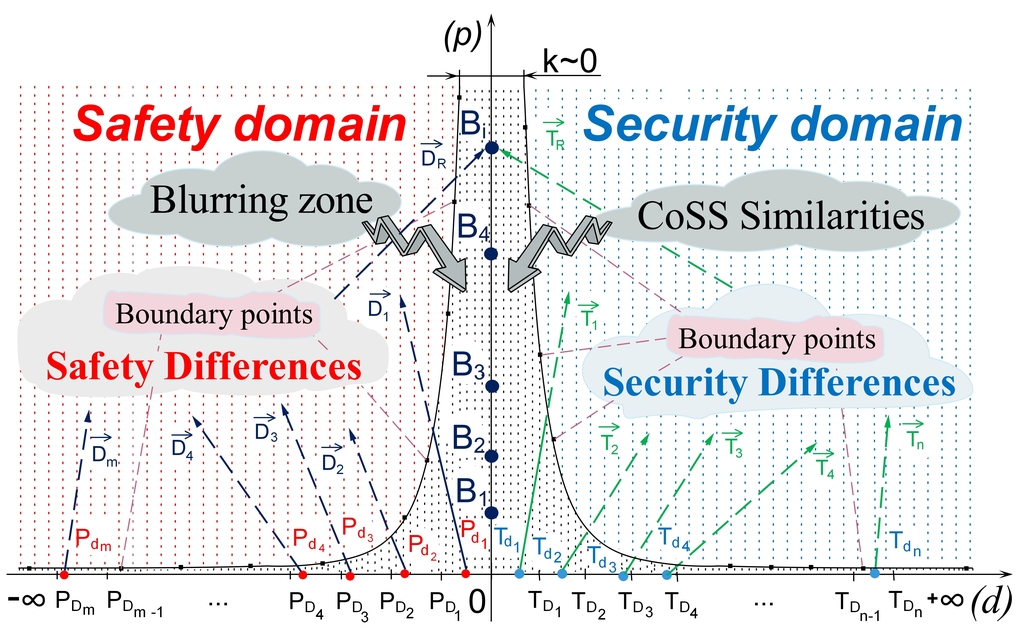
After decades of theoretical disputes and the emergence of eight general evolutionary models, Prof. Korać makes a historical breakthrough, proposing an innovative, unique engineering eCoSS model, the first numerically based solution that enables a clear, mathematically supported delineation of the two phenomena. The model combines advanced computer and mathematical methodologies, enabling empirical validation and visualization of boundaries through real industrial IT studies.
The results are unambiguous and scientifically revolutionary, as they clearly show that security and safety are not synonyms, but clearly separated areas defined by a precise demarcation line. These simple facts are a basis for solving numerous open questions, not only in the IT sector, but in areas such as security, biology, politics, medicine, and other disciplines.
This model not only solves the long-standing dilemmas but vigorously trod the path to a new generation of research and practical solutions, including the development of advanced tools for synchronization in the cyber area.
Besides Professor Korać, the co-authors, a docent at the PMF UNIBL, Prof. Dimitrije Čvokić, PhD, and a Professor at the Faculty of Organizational Sciences of the University of Belgrade, Dejan Simić, PhD, participated in this significant research.