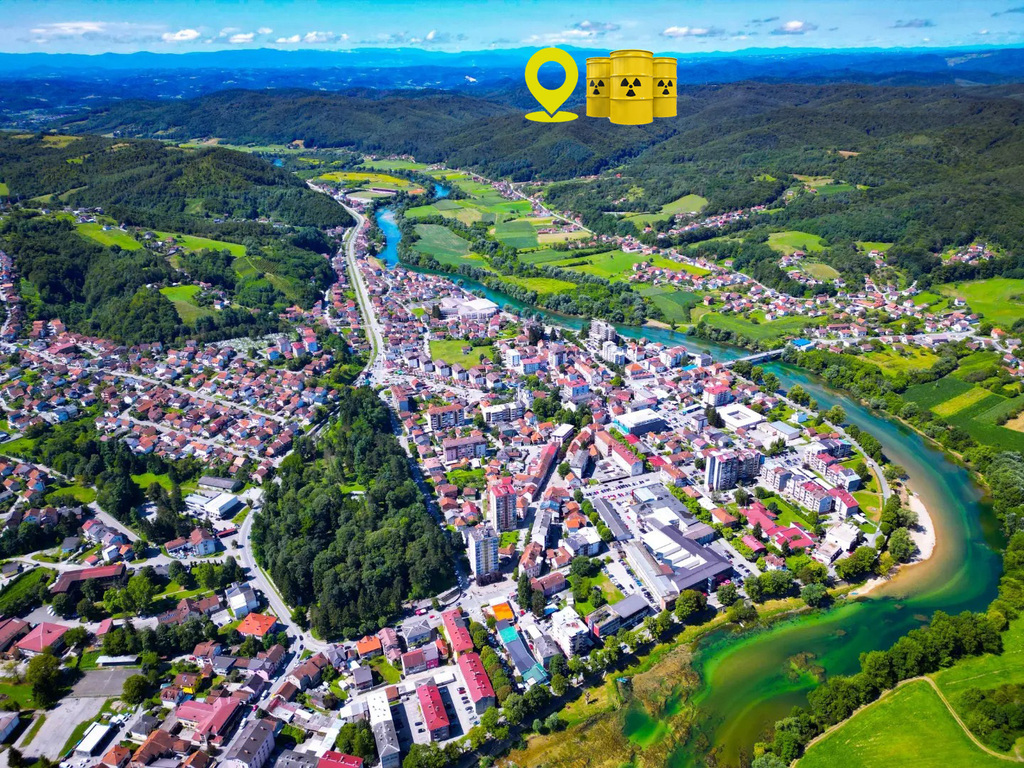
A scientific paper analyzing the Trgovska Gora case from the perspective of cross-border environmental justice has been published in the international scientific journal Sustainability (ISSN: 2071-1050).
The journal Sustainability is indexed in the Science Citation Index Expanded (SCIE) and Social Sciences Citation Index (SSCI) databases within the Web of Science Core Collection. Its Journal Impact Factor is 4.1 (2025).
The paper, entitled “Perceived Environmental Injustice in a Transboundary Radioactive Waste Siting Dispute: Implications for Social Sustainability in Border Communities of Bosnia and Herzegovina”, was authored by Prof. Velibor Lalić, PhD, from the Faculty of Security Sciences of the University of Banja Luka; Armin Kržalić from the Faculty of Criminalistics, Criminology and Security Studies of the University of Sarajevo; Vladimir M. Cvetković from the Faculty of Security Studies of the University of Belgrade and the Montanuniversität Leoben; Milan Lipovac from the Faculty of Security Studies of the University of Belgrade; and Mario Crnković from the Green Team organization in Novi Grad.
The particular significance of the paper lies in its examination of a dimension of the Trgovska Gora case that has so far been insufficiently represented in the scientific literature. Previous research has predominantly focused on its technical, environmental, legal and economic aspects, whereas the new study places at the center of its analysis the residents of communities located outside the country in which decisions on the planned facility are formally made.
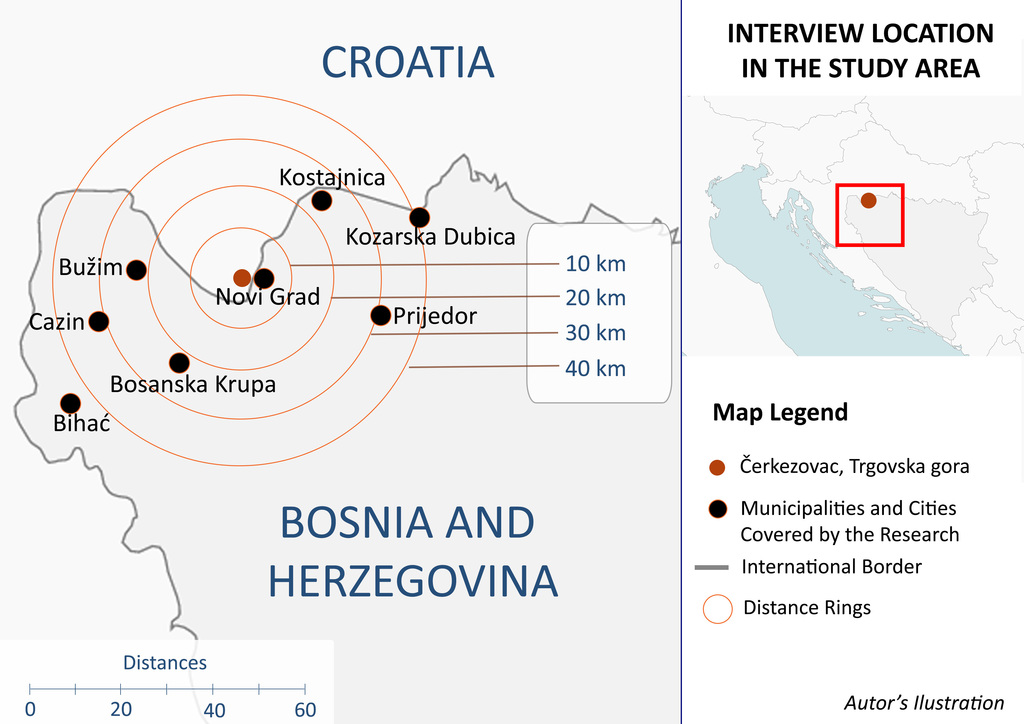
The study represents one of the first systematic empirical studies focused on the perceptions of residents of local communities considered potentially affected by the planned long-term storage facility for low- and intermediate-level radioactive waste. As a reminder, the planned facility is to be located at Čerkezovac on Trgovska Gora in the Republic of Croatia, in the immediate vicinity of the Una River, the natural border between the Republic of Croatia and the Republic of Srpska – Bosnia and Herzegovina.
The study was conducted on the basis of 385 valid questionnaires collected from November 2025 to April 2026 among adult residents of Novi Grad, Kostajnica, Kozarska Dubica, Prijedor, Bihać, Cazin, Bužim and Bosanska Krupa. The authors based the study on three key dimensions of environmental justice: distributive justice, concerning the distribution of potential risks and benefits; procedural and participatory justice, concerning participation and the ability to influence decision-making; and recognition justice, encompassing the institutional recognition of the interests and position of potentially affected communities.
The results show clearly expressed perceptions of injustice across all three dimensions of environmental justice analyzed. On a five-point scale, where a value of 3 represents a neutral position, the mean value was 4.351 for the procedural and participatory dimension, 4.304 for distributive injustice and 4.109 for recognition injustice. All three values were statistically significantly above the neutral point (p < 0.001), with large effect sizes, indicating a strong and consistent pattern of attitudes in the sample.
The findings at the level of individual questions further illustrate this pattern. As many as 82.3% of respondents agreed that it was unjust to plan a radioactive waste storage facility near the border with Bosnia and Herzegovina. A total of 83.9% of respondents supported the formal right of residents of border communities in Bosnia and Herzegovina to participate in decision-making, while the same percentage believed that their views should be taken into account regardless of the state border. At the same time, 80.2% assessed the site-selection process as non-transparent and exclusionary towards potentially affected communities.
The scientific significance of the paper extends beyond the local context of the Trgovska Gora case and connects it with the broader debate on environmental justice, transboundary risk governance, public participation and the legitimacy of decision-making processes. The specificity of the case lies in the fact that formal decision-making authority rests with one state, while some geographically proximate communities that may be affected are located in another state and outside its administrative system. It is precisely this perspective that the authors identify as one of the key theoretical contributions of the study, as it raises the question of how the principles of fairness, participation and institutional recognition apply when the place of formal decision-making and the space of potential consequences do not coincide. Based on the findings, the authors point to the importance of transparent cross-border participation, access to site-selection criteria, independent scientific verification, continuous monitoring of environmental and health conditions, and meaningful involvement of potentially affected local communities and civil society organizations.
With the publication of this paper, the Trgovska Gora case gains a clearer place in the international scientific debate on transboundary environmental justice, public participation, institutional recognition, and social sustainability.
The paper is available in open access at this link.