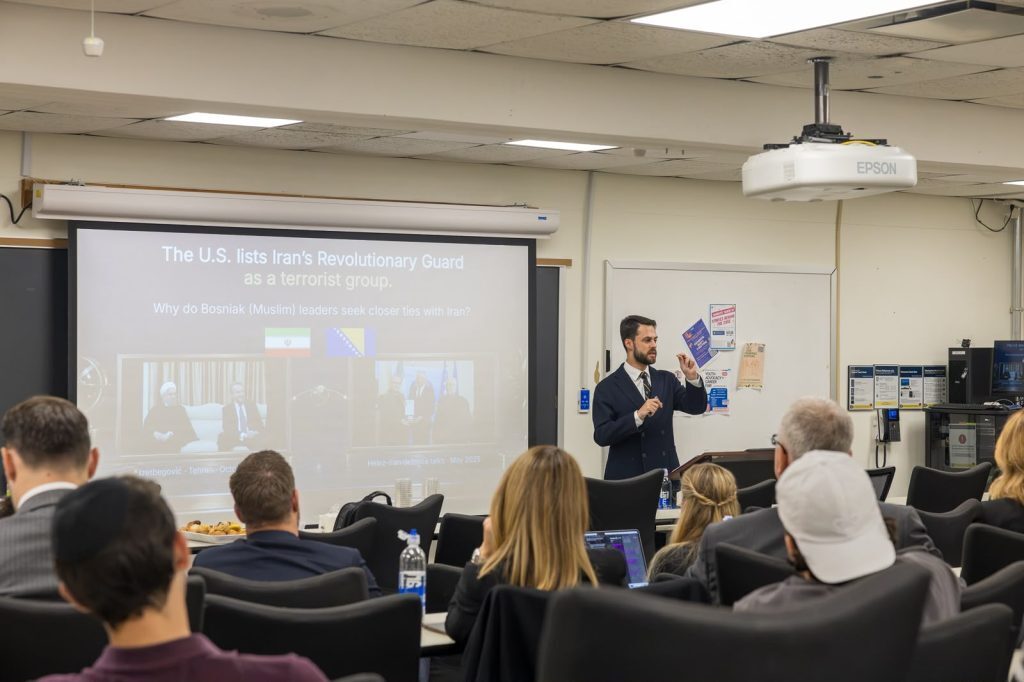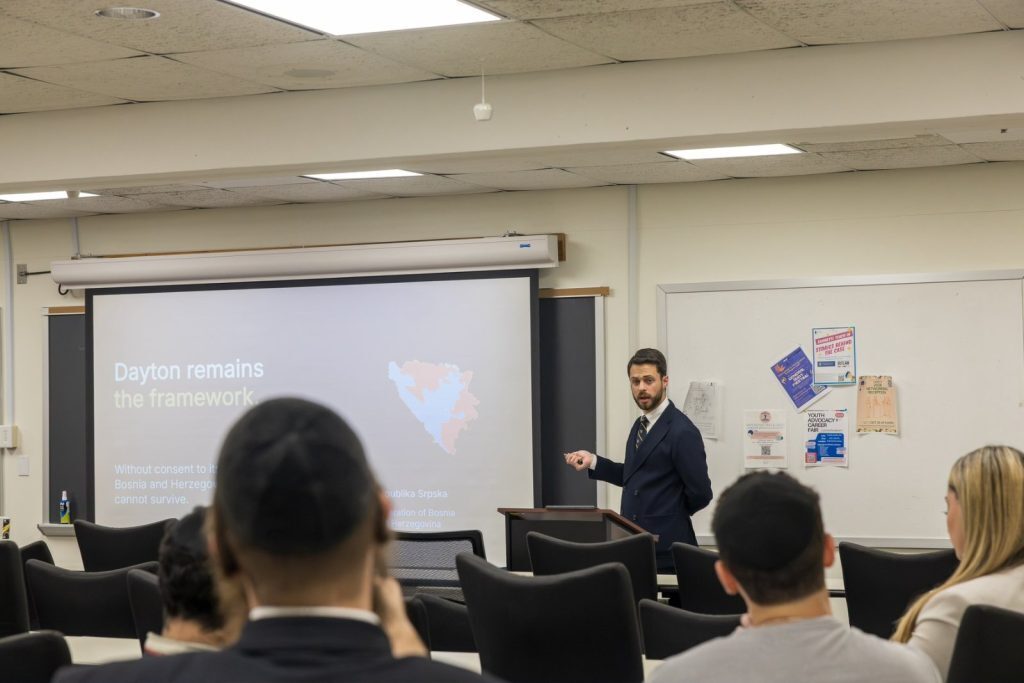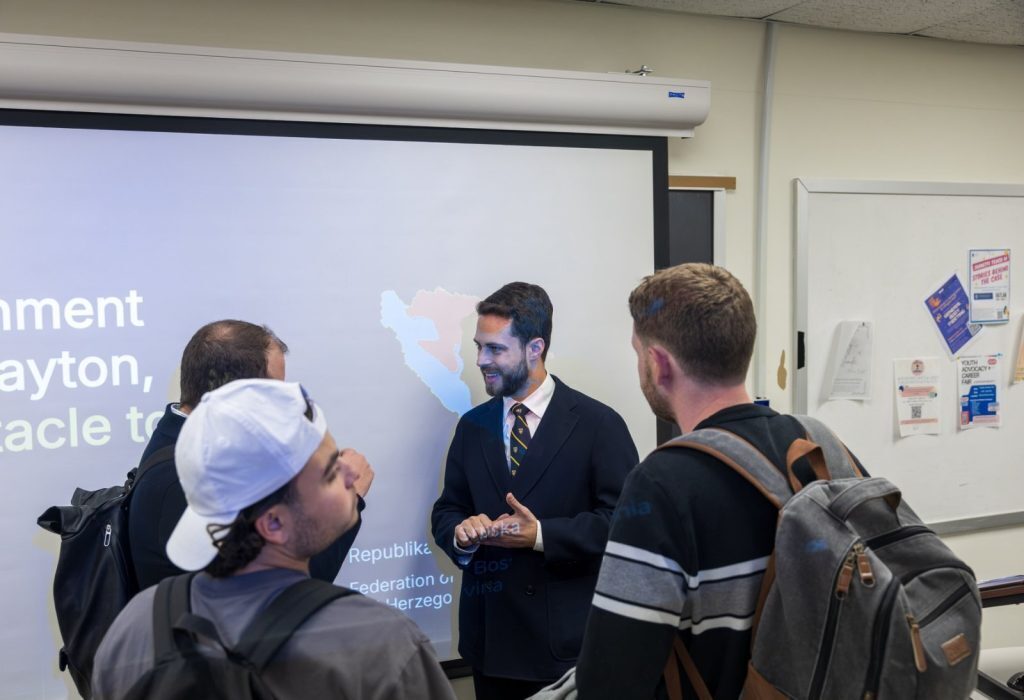
Marko Romić, MA, Senior Teaching Assistant at the Faculty of Law of the University of Banja Luka, delivered a lecture entitled “Three Decades of Dayton: A Peace That Never Became a State” at Georgetown University Law Center in Washington, D.C., on 21 October 2026.
The lecture focused on the constitutional position of the Republic of Srpska and the challenges of preserving the Dayton framework three decades after the conclusion of the peace agreement.
Drawing on Bosnia and Herzegovina's historical and social diversity, Romić explained why the agreement established two entities and mechanisms to protect the three constituent peoples. He noted that the Dayton compromise had made it possible to end the war, but that differing interpretations of the agreement and efforts to reshape it had remained a source of constitutional and political disputes.
The analysis focused on the Republic of Srpska as an entity with its own institutions and constitutionally defined powers. Romić presented arguments that preserving its self-governance and mechanisms for protecting the Serb people constituted respect for the terms under which the peace agreement had been accepted. He specifically challenged the approach that the functionality of common institutions could be achieved by gradually weakening the entities and bypassing the required consent of their representatives.
The role of the High Representative, the practice of imposing laws, and the consequences of international intervention for the institutions of the Republic of Srpska were critically examined. Particular emphasis was placed on the legal basis for such actions and the democratic accountability of those in power. In the same context, the requirements of European integration were analyzed in relation to the constitutional division of powers and safeguards against outvoting.
The lecture also addressed contemporary security challenges, political relations with Iran, and the protection of Christian and Jewish communities. These topics were linked to the broader question of preserving political and religious equality, with consideration given to the role of the Republic of Srpska in countering extremism and exclusion.
Romić concluded that sustainable solutions must be sought with due respect for the constitutional position of the Republic of Srpska. Its powers and self-governance cannot be treated as temporary arrangements to be gradually dismantled, but rather as rights enshrined in the peace and constitutional agreement. Protecting these rights, alongside the equality of the constituent peoples and the rights of all citizens, provides a starting point for reaching agreement on future changes.
(PF/UNIBL)